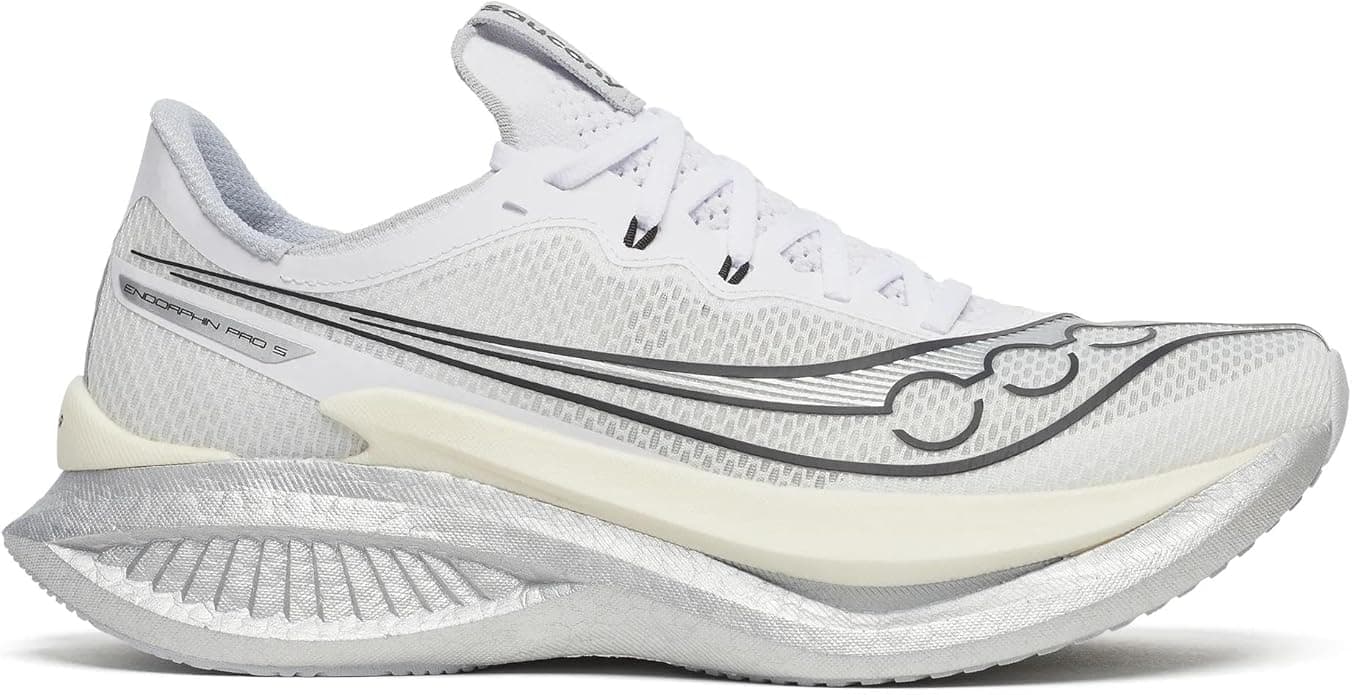
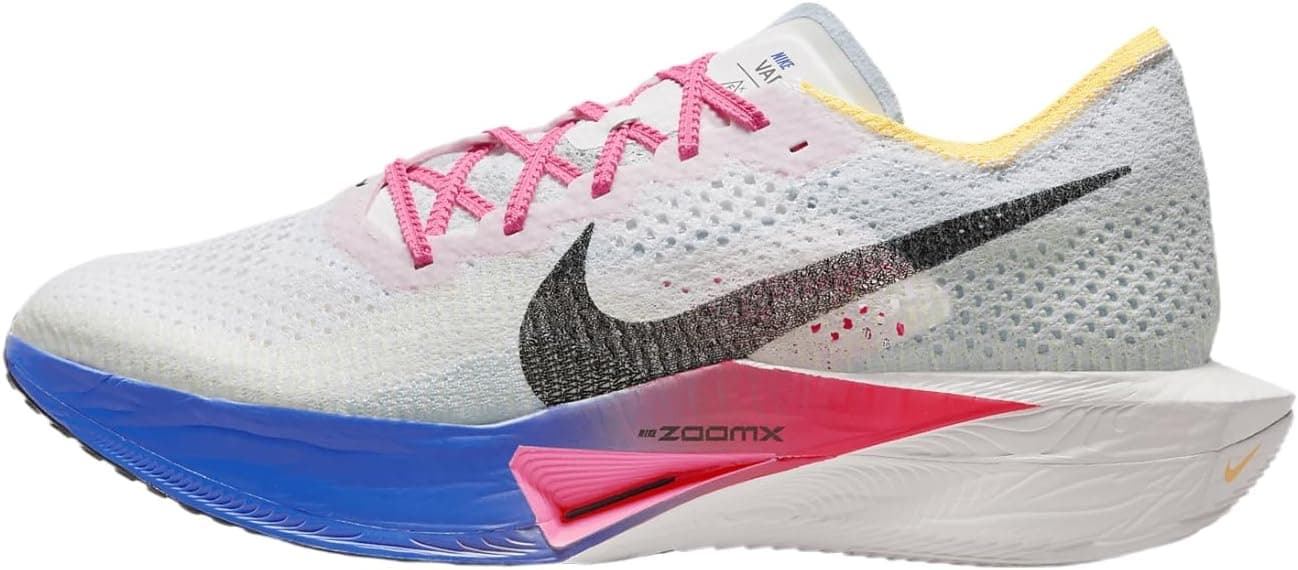
Two of the most popular carbon-plated super shoes in the HYROX space go head to head. The Saucony Endorphin Pro 5 — our overall #1 pick for HYROX — against the Nike Vaporfly 3, the featherweight marathon racer that elite HYROX athletes like Beau Wills and Dylan Scott have worn on race day.
Both shoes deliver exceptional running performance. But HYROX is not just running — it is 8 km of running plus 8 demanding functional fitness stations. The question is not which shoe is faster on a road course. The question is which shoe handles the full HYROX format better.
The Shoes
Spec Comparison
| Spec | Endorphin Pro 5 | Vaporfly 3 |
|---|---|---|
| Weight (Men's) | 213g | 186g |
| Drop | 8mm | 8mm |
| Stack Height | 39/31mm | 40/32mm |
| Plate | Carbon | Carbon |
| Midsole | PWRRUN PB | ZoomX |
| Price | $225 | $260 |
Running Performance: The 8 km Factor
On pure running metrics, the Vaporfly 3 has an edge. At 186g, it is 27g lighter than the Pro 5 — a difference you can feel across eight 1km segments. Nike's ZoomX foam is arguably the most responsive midsole material on the market, and it delivers an explosive, bouncy ride that makes fast paces feel effortless.
The Pro 5 counters with PWRRUN PB foam and a carbon plate that produces a smoother, more controlled ride. It is not as snappy as the Vaporfly, but it is remarkably consistent — the shoe feels the same on run 1 as it does on run 8, which matters when fatigue compounds.
By the numbers: The Vaporfly 3 may save you 1-3 seconds per 1km segment compared to the Pro 5 for most athletes — roughly 8-24 seconds across the full 8 km of running. But that advantage can be erased (or reversed) at the stations.
Grip and Traction: The HYROX Dealbreaker
This is where the comparison shifts dramatically. Our data shows that poor outsole traction can cost 30-45 seconds per sled station — and HYROX has two of them.
The Endorphin Pro 5 features a full-coverage rubber outsole with a tread pattern designed for multi-surface grip. Athletes consistently report reliable traction on indoor surfaces, sled push platforms, and sweaty floors.
The Vaporfly 3 has minimal outsole rubber. Nike designed it for road racing, where grip requirements are lower. On indoor HYROX surfaces, particularly during sled pushes, athletes report noticeably less traction. If you slip even once during a sled push, the time lost dwarfs any running speed advantage.
Winner: Endorphin Pro 5 — and it is not close.
Stability for Stations
HYROX demands movements that no pure running shoe was designed for: sandbag lunges, wall balls, burpee broad jumps, and heavy sled work. Stability matters.
The Vaporfly 3's 40mm stack height and narrow base create a tippy platform that many athletes find uncomfortable during lateral movements and single-leg exercises. The ZoomX foam is soft and responsive — perfect for forward motion, less ideal for the multi-directional demands of HYROX stations.
The Endorphin Pro 5 has a slightly lower stack (39mm) and a wider, more stable platform. The PWRRUN PB foam is responsive but firmer than ZoomX, providing a more planted feeling during lunges and wall balls. Athletes consistently report feeling more confident on stations in the Pro 5.
Winner: Endorphin Pro 5
Cushioning and Late-Race Protection
HYROX races typically last 75 to 120+ minutes. Your legs take a beating from both the running and the stations. By runs 6-8, cushioning becomes critical.
Both shoes offer generous stack heights and excellent foam technology. The Vaporfly's ZoomX provides a softer, bouncier ride, while the Pro 5's PWRRUN PB is slightly firmer but incredibly consistent.
Our analysis of 700,000+ race results shows that athletes lose the most time on runs 5-8. A shoe that protects your legs through the full race — stations included — will save more time than one that is marginally faster on the early runs.
Winner: Tie — both provide adequate cushioning, though the Pro 5's stability advantage means your legs work less at stations, potentially preserving more energy for late runs.
Durability and Value
The Vaporfly 3 is a dedicated race-day shoe. Most runners get 150-200 km before performance degrades. At $260, that is roughly $1.30-$1.73 per km.
The Endorphin Pro 5 is significantly more durable. Athletes report solid performance through 400+ km, making it viable for both training and racing. At $225 with double the lifespan, the cost per km drops to approximately $0.56.
Winner: Endorphin Pro 5 — $35 cheaper with roughly twice the durability.
Who Should Choose What?
Choose the Endorphin Pro 5 if:
- You want the best all-round HYROX shoe
- Grip and station stability are priorities
- You want a shoe for both training and racing
- Budget matters ($225 vs $260)
- You are a first-time or intermediate HYROX athlete
Choose the Vaporfly 3 if:
- Running is your dominant discipline and you want maximum 1km speed
- You have tested it on sled pushes and confirmed adequate grip at your venue
- You have strong station technique that does not require extra stability
- You are an elite HYROX athlete chasing podium times
Critical test: If you are considering the Vaporfly 3 for HYROX, test it on a sled push before committing. The grip difference between indoor venues varies significantly. If the traction works at your race venue, the Vaporfly becomes a much stronger contender.
The Verdict
Key Takeaway
The Saucony Endorphin Pro 5 is the better HYROX shoe for the vast majority of athletes. It matches the Vaporfly's running performance closely enough while significantly outperforming it on grip, stability, durability, and price. The Vaporfly 3 is the faster pure running shoe — but HYROX is not pure running. The Pro 5's ability to handle every aspect of the race without a single weakness makes it our clear recommendation. Save the Vaporfly for your next road marathon.