50,000 athletes. Eight days of racing. The largest HYROX event in North American history. HYROX New York runs from May 28 to June 7, 2026 — and if you're reading this, you have exactly four weeks to get ready.
Four weeks is not enough time to build a new engine. But it is enough time to sharpen what you already have, dial in your race plan, and show up on the start line in the best shape possible. This guide covers exactly what to do with the time you have left — week by week.
Key Takeaway
With 4 weeks to go, your fitness is mostly locked in. The goal now is to sharpen your running, maintain station strength without adding fatigue, nail your pacing plan, and taper into race day feeling fresh and confident. Don't try anything new — refine what you've built.
What Makes New York Different
This isn't a regular city race. HYROX NYC spans two weekends and eight consecutive days of racing, making it the largest single HYROX event ever staged in North America. A few things to keep in mind:
- Indoor venue — expect warm conditions with limited airflow. Hydration strategy matters more than usual.
- Massive field — with 50,000 athletes across the event, the Roxzone will be crowded. Practice clean transitions and expect bottlenecks at stations.
- Energy in the room — the atmosphere at mega-events is electric. It's easy to go out too fast in Run 1 when 500 people are sprinting around you. Stick to your plan.
If this is your first HYROX, read our complete beginner's guide before continuing — it covers everything from what to expect to how to pace yourself.
Your 4-Week Countdown
Week 4 Out (This Week): Last Hard Push
This is your final week of meaningful training volume. After this, you're tapering. Keep your running at full volume — one easy run, one tempo, one interval session. For strength, this is the last week to go hard on stations. Simulate race conditions if you can.
Our 12-Week Training Program ($29.99) structures this entire taper period for you — including exactly which sessions to keep and which to cut. The 10-Week Running Program ($19.99) covers the running side with zone-based sessions designed for this phase.
Gear check this week: Make sure you have your race-day shoes broken in. Do at least one run in them this week. Don't race in new shoes.
The shoe you pick matters. For HYROX specifically, you need something that handles both the 8km of running and the grip demands of sled pushes and lunges:

Our top recommendation. Carbon-plated with PWRRUN HG cushioning. Fast on the runs, stable enough for every station.

The official HYROX shoe. Carbon plate + NITRO foam, designed specifically for hybrid racing.
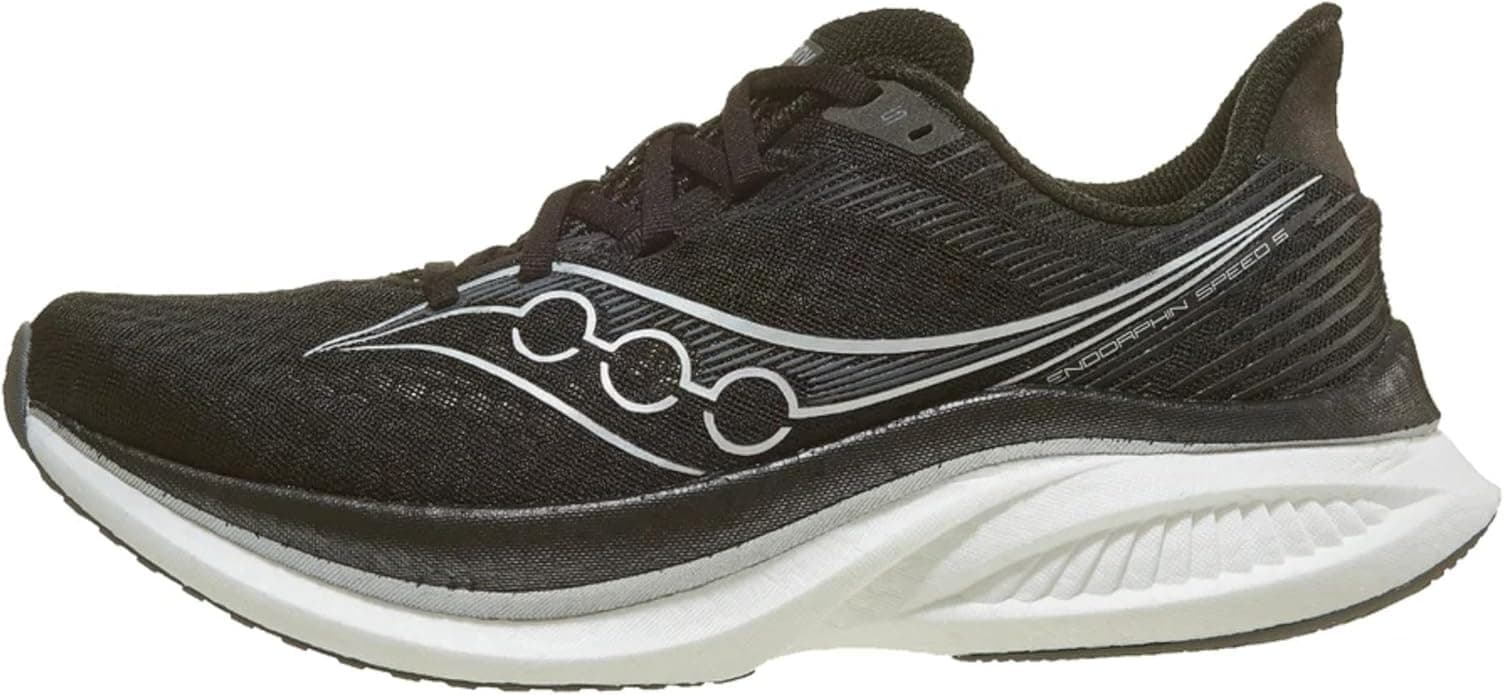
See our full shoe and gear breakdown for detailed comparisons.
Week 3 Out: Start Winding Down
Volume drops by about 30% this week. The strength work gets lighter — you want to maintain, not build. Keep running three times but shorten everything. Station work should feel easy — focus on transitions and movement quality, not load.
Stop trying to get stronger. Your strength is built. Adding load now only creates soreness that hasn't recovered by race day. Maintain the movements, reduce the weight.
Running is different. Unlike strength, your running can still improve meaningfully in this window. Your cardiovascular system adapts faster than your muscles recover from heavy loads. Keep your interval sessions sharp — they maintain your VO2 max without adding cumulative fatigue.
This is the core principle from our running training structure guide: polarized training means 80% easy, 20% hard. During taper, you reduce the volume of both, but keep the intensity of the hard sessions.
Week 2 Out: Taper Hard
This is where discipline matters. You'll feel restless. You'll feel like you're losing fitness. You're not — you're absorbing the training you've done over the past months.
Cut running volume in half. Drop to two or three short sessions — keep one brief tempo effort to stay sharp, but nothing long. One light station run-through at low effort, then you're done with strength work until race day.
What to focus on instead of training:
- Pacing strategy. Know your target time for each run segment. Our HYROX running strategy guide breaks down the "pacing by thirds" approach — runs 1-3 controlled, runs 4-6 grinding, runs 7-8 pushing. Write your split targets down.
- Nutrition. Dial in what you'll eat the morning of and during the race. Test it this week during your easy runs.
- Sleep. This week matters more than race-night sleep. Bank quality hours now.
Use our Pacing Calculator to set target splits based on your goal finish time. Knowing exactly what pace to hit on each 1km run eliminates guesswork and prevents the Run 1 adrenaline sprint that kills your second half.
Race Week: Stay Sharp, Stay Calm
One easy short jog early in the week. That's it. Everything else is rest, mobility, and mental prep.
In the days before your race:
- Lay out all gear, pin your bib, charge your watch
- Review your pacing plan one more time
- Pre-hydrate — sip water consistently, don't chug the night before
Race morning:
- Eat 2.5-3 hours before your wave time. Something you've tested — nothing new.
- Arrive early. The NYC venue will be packed. Give yourself time to find your wave, warm up, and settle your nerves.
- Check out our complete warm-up protocol for the full race-morning routine.
Race-Day Execution
Running Strategy
HYROX is not a 10K. It's 8 x 1km under cumulative fatigue. The biggest mistake athletes make — especially in massive events like NYC — is going out at 5K pace on Run 1 because the crowd energy pulls them forward.
Our data from analyzing thousands of race results shows that the best athletes keep their variance under 15 seconds per km between Run 1 and Run 8. Here's how:
| Segment | Effort | Pace Guideline |
|---|---|---|
| Runs 1-3 | 75-80% | 10-15 sec/km slower than 5K pace |
| Runs 4-6 | 80-85% | Accept 5-10 sec/km slowdown |
| Runs 7-8 | 85-90%+ | Hold steady or push — empty the tank on Run 8 |
If running under fatigue is your weakest area, our 10-Week Running Program ($19.99) trains this specifically with run-station-run combos and progressive fatigue sessions. With 4 weeks to NYC, you can still run the final phase of the program and arrive sharper.
Station Tips
A few station-specific reminders based on our performance analysis data:
- Sled Push is the most time-variable station. Pace yourself — short, powerful pushes with controlled breathing. Don't sprint the first 5 meters and stall.
- Wall Balls will spike your heart rate. Find a rhythm and don't break. Every time you drop the ball and pick it up, you lose 3-5 seconds plus energy.
- Farmers Carry & Sandbag Lunges are where steady athletes gain time. Don't rush, don't rest — just move.
- Roxzone transitions — data from our Roxzone efficiency analysis shows that efficient athletes save 30-60 seconds across 8 transitions. Have a plan: grab water at specific stations, know which direction to run, don't wander.
Gear Checklist for NYC
Don't leave this to race week. Get everything sorted now and do a test run in your full race-day setup.
Shoes (Most Important Decision)
Your shoes need to handle 8km of running AND grip on sled pushes, lunges, and Roxzone turf. Here are our tested recommendations:
| Shoe | Best For | Price | Link |
|---|---|---|---|
| Saucony Endorphin Pro 5 | Race day (top pick) | ~$225 | Men's / Women's |
| PUMA Deviate NITRO Elite 4 HYROX | Official HYROX shoe | ~$310 | Men's / Women's |
| Saucony Endorphin Speed 5 | Best value / first race | ~$160 | Men's / Women's |
| Saucony Endorphin Elite 2 | Ultra-competitive racers | ~$275 | Buy |
Watch & Heart Rate Monitor
Tracking your heart rate during HYROX is a game-changer for pacing. If you're running by feel alone, you'll overcook the first half.
- Garmin Forerunner 570 — AMOLED display, multi-band GPS, advanced training metrics. The best mid-range option for race day.
- Garmin HRM-Pro Plus — Chest strap with dual-transmission (ANT+ and Bluetooth). The gold standard for accurate HR during high-intensity efforts. Far more reliable than wrist-based HR during stations.
- Garmin HRM-Fit — Clip-on monitor designed for women. Attaches to a sports bra — no chest strap needed.
Recovery (Start Now, Not After)
You're tapering for 3 weeks. Use this time to actively recover — foam rolling, percussion therapy, sleep. Arrive on race day with fresh legs.
- Theragun Prime (6th Gen) — Premium percussive therapy. Quiet, effective, 2-hour battery. Use it daily during taper on quads, hamstrings, calves.
- Bob and Brad D6 Pro — Same deep tissue results at a fraction of the price. 7 attachments, 85lbs stall force. Great budget option.
Browse our complete gear recommendations page for the full list.
The Last 4 Weeks of Training (Program Summary)
If you're following our 12-Week Training Program, you're entering the final phase right now — and this is exactly how it's structured. Here's the weekly outline:
| Week | Running Volume | Strength Load | Key Focus |
|---|---|---|---|
| Week 9 (now) | Full volume | Moderate-heavy | Last hard push, race simulation |
| Week 10 | -30% volume | Moderate | Maintain intensity, reduce load |
| Week 11 | -50% volume | Light | Sharp intervals, movement quality |
| Week 12 (race week) | 1 easy jog | None | Rest, pacing review, gear prep |
The 10-Week Running Program ($19.99) follows the same taper structure for the running sessions. If you've been training without a structured plan and want to lock in the final 4 weeks, it covers exactly this phase — polarized sessions that keep your speed without adding fatigue.
Bottom line: You can't build new fitness in 4 weeks. But you can absolutely lose race-day performance by training too hard, too late. Trust what you've done. Sharpen. Taper. Show up ready.
Quick Reference: Your NYC Countdown
- 4 weeks out: Last hard training week. Break in race shoes. Order any missing gear.
- 3 weeks out: Reduce volume 30%. Strength drops to maintenance. Practice transitions.
- 2 weeks out: Taper hard. Finalize pacing plan. Dial in race-day nutrition.
- Race week: One easy jog. Lay out gear. Pre-hydrate. Review pacing splits.
- Race morning: Eat 2.5-3 hours before. Arrive early. Warm up. Execute the plan.
Going deeper:
- HYROX Running Strategy: Why Marathon Pacing Will Destroy Your Race — The pacing approach that separates fast finishers from blow-ups
- How to Structure Your HYROX Running Training — The science behind polarized training and why 80/20 works
- Station Performance Analysis — Where athletes gain and lose the most time
- Complete HYROX Gear Guide — Deep dive into every gear decision
- 12-Week Training Program ($29.99) — The full structured plan
- 10-Week Running Program ($19.99) — Focused running plan for faster splits